• Welcome to RCTalk! 🚀

    Join the #1 RC community where hobbyists connect, share, and get expert advice on RC cars, trucks, boats, drones, and more!

    • Friendly & passionate RC enthusiasts
    • RC tips & troubleshooting
    • Buy, sell & trade RC gear
    • Share builds & upgrades

Hydrogen Peroxide as a booster?

This site may earn a commission from merchant affiliate
links, including eBay, Amazon, and others.

EvhCo

RCTalk Qualifier
Messages
172
Reaction score
23
Points
90
RC Driving Style
  1. Racing
I've been reading about N2O for some time, and I've noticed some indirect references to Hydrogen Peroxide which, guess what, is a strong oxidizer, just like N2O, and has even been used in rocketry, just like N2O. Could Hydrogen Peroxide, when burned, displace oxygen in a similar fashion to N2O?

EDIT: The boiling point of H Peroxyde is 150.2 °C, but it will undergo thermal decomposition if heated to this temperature.
Since thermal decomposition is an endothermic reaction, it might also help cooling, right?
 
Last edited:
While I have no experience with h2o2 as a booster, the question most obvious to me is that if it were an effective alternative to nos, why wouldn't it be used? It is readily available and much cheaper. Just a quick thought. I would certainly be interested in knowing if you are able to put it to use tho! Good luck!!! Please post any results!
 
While I have no experience with h2o2 as a booster, the question most obvious to me is that if it were an effective alternative to nos, why wouldn't it be used? It is readily available and much cheaper. Just a quick thought. I would certainly be interested in knowing if you are able to put it to use tho! Good luck!!! Please post any results!

Well, H2O2's weak oxidizing properties might be the answer as to why it isn't used in 1:1 cars. It would require a humongous amount to see any boost, but it might prove useful in small-scale engines. I'll see what I can come up with ;)
 
I did a small test today. I put some H2O2 in a syringe and poured on a stove, and I did notice the flame getting bigger for a split of a second! Unless my eyes were deceiving me. I'll test some more and then create a H2O2 injection assembly for my engine, see if it gets any boost.
EDIT: The standard 3% H2O2 bottle available to the public should be stripped of water using freeze drying before being left with "pure" hydrogen peroxide. There is usually around 10g of peroxide and 100g of water in one bottle, so one would require plenty of bottles (around 5) to obtain enough for 3-4 small boosts for an engine.
 
Last edited:
The compression will likely cause it to burn hotterand faster (if it works like other fuels, just to keep in mind) also, perhaps the fact that it is an 'oxidizer' is the reason it isn't used. It may attack the metals too efficiently? Again, good luck!
 
The compression will likely cause it to burn hotterand faster (if it works like other fuels, just to keep in mind) also, perhaps the fact that it is an 'oxidizer' is the reason it isn't used. It may attack the metals too efficiently? Again, good luck!

Not really, since N2O is also an oxidizer. A powerful one. Thanks! :)
 
Curious to know if this project has made any headway????
Hehe, well I'm about to finish my nitrous injection kit soon, and I'll see how much boost would be best for this particular engine, since safety comes first in my book. As soon as that is done, I'll study the h2o2 case. I bet it's gonna be interesting.
 
Well, the NoS project failed since the injector I built was WAY too heavy for my car, and I couldn't find a way to man the solenoid remotely. A turbocharger project replaced it, though :).

I will test with the peroxide around this week and film it. If it works, it might as well be a liquid replacement for NoS.

If you wanna see, I can post some pics of the obsolete NoS injector when I get home.
 
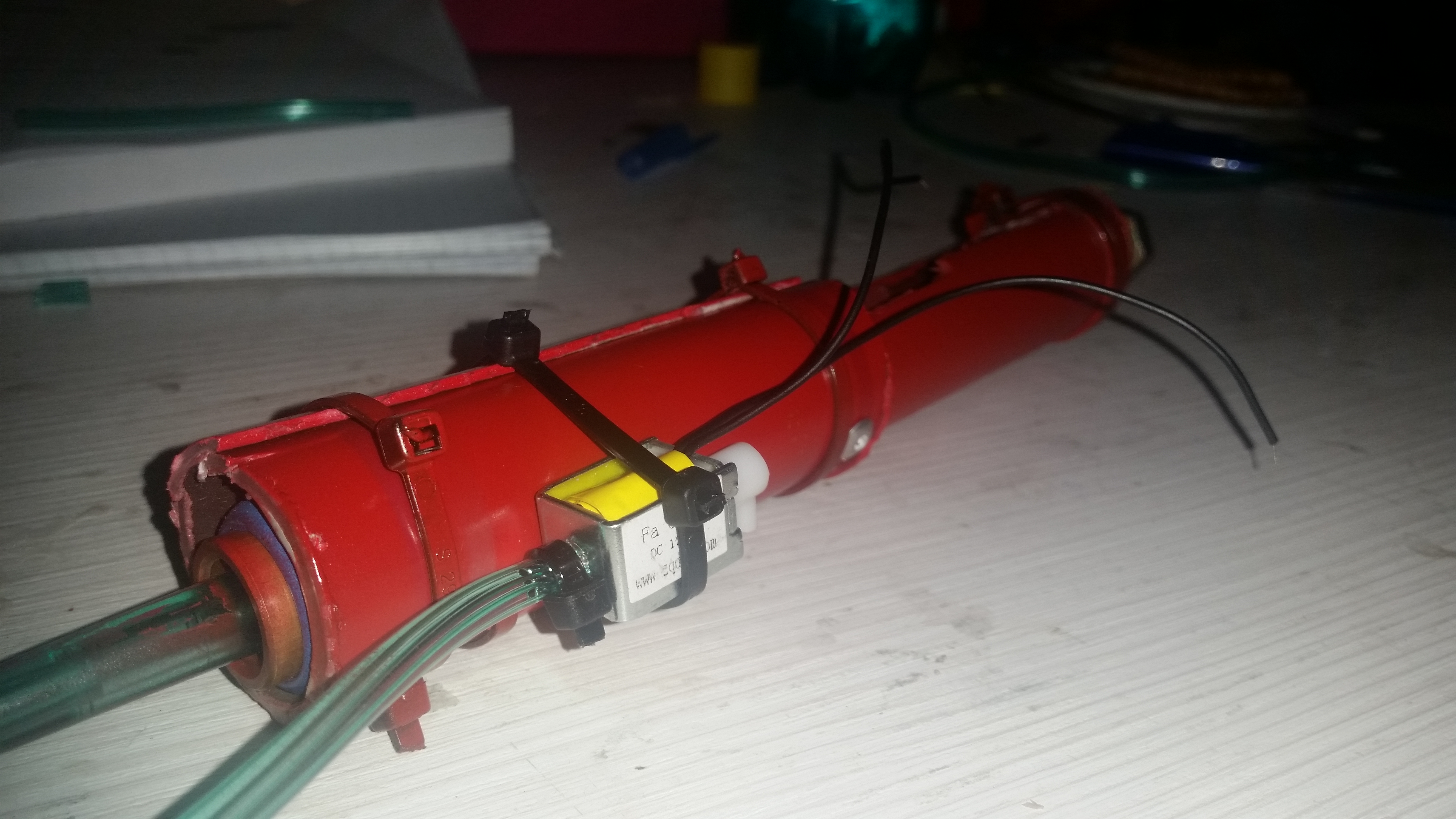
Here is a photo of the obsolete nitrous injector:
dYbHmPe.jpg


The PVC casing housed the intake as well as the whipped cream canister itself. You would place the canister in there and screw the bolt behind it until the intake pierced the can. The nitrous would flow up to the solenoid valve (the small yellow one), which would be opened by the controller (Arduino, in my case) when you wanted the boost.

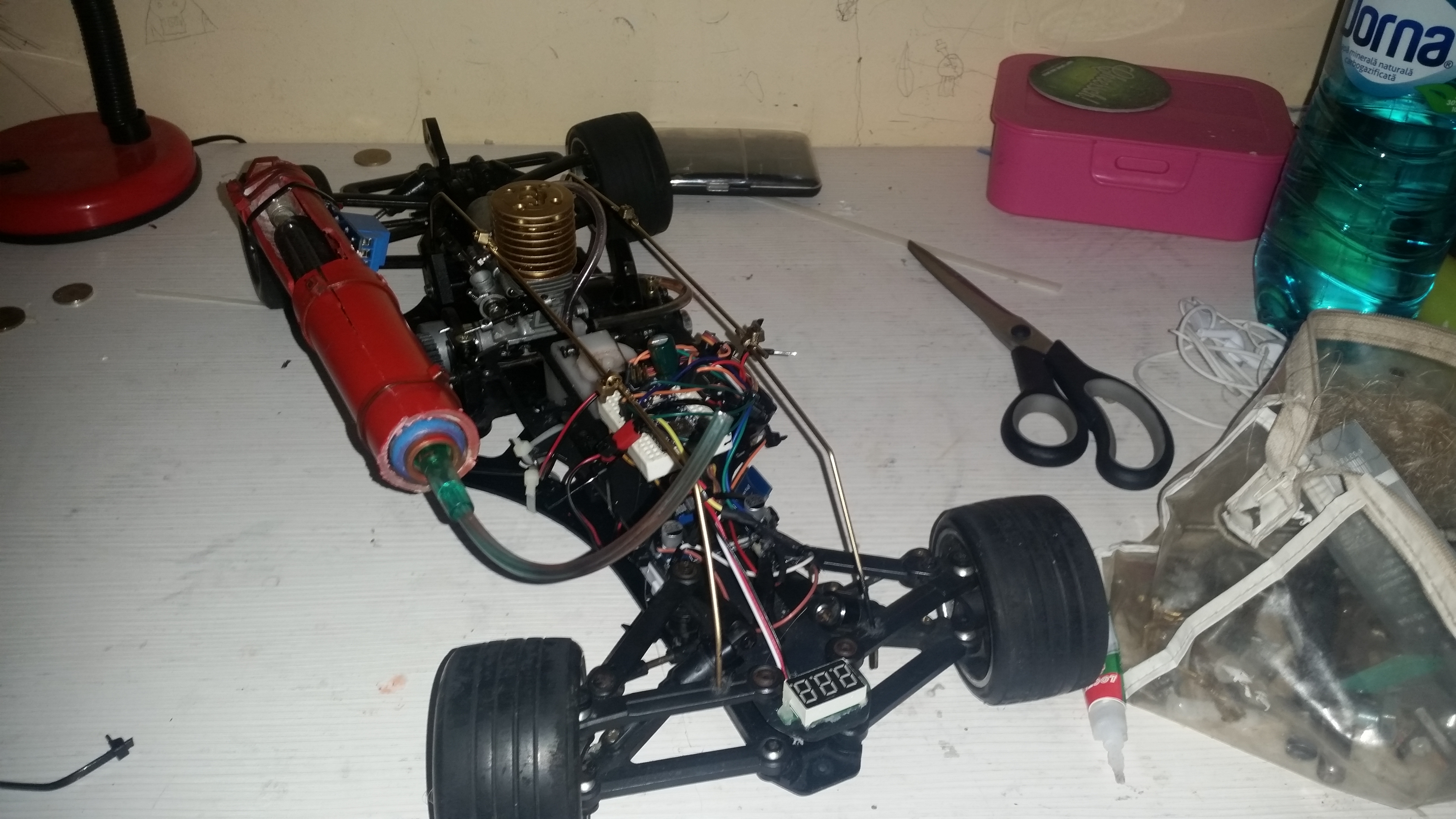
Here is the injector mounted on the car;
DJ5vL3v.jpg


It was attached to the car using two steel rods on the side, and the nitrous would enter the engine through the carb's air intake.

Needless to say, it was extremely sluggish as it weighed a lot, and would knock out the car's center of gravity. On top of all that, the solenoid was broken, so I threw the injector on the shelf and went along with it.

Note: These are old photos. The overall look of the car and the layout were improved since then.

I will test with the H2O2 tomorrow afternoon. I'm a bit nervous :nailbiting:.
 
Hey guys, I couldn't test with the peroxide today as I arrived home late, but some guys on another forum say they're using 1 drop of peroxide per tank to increase power. I think I might add WD-40 along in the "boost tank" in order to be able to provide longer peroxide boosts without corrosion risk. Good thing I stumbled on that post, or I would've wrecked the engine.

EDIT: People associate it with those nitro superchargers they sell. Things will run lean once the peroxide kicks in, but since there are short boosts, it shouldn't be a problem. We're close, real close!
 
EDIT: People associate it with those nitro superchargers they sell ?

You shouldn't be taking any advise from any people associated with nitro superchargers because they have a bad track record when it comes to creditable knowledge on performance. And I assume you have studied the decomposition of hydrogen peroxide and are aware that when it decomposes at high temps it creates water and O2? How do you think that water in your blend is going to work out for you?
 
Water would actually greatly benefit the engine.
Companies are selling methanol/water injection systems for 1:1 cars. This mixture helps cooling and, in some cases, the steam cleans the valves, valve seats, and even the piston tops and intake, reducing carbon build-up and further contributing to cooling.

The short answer is yes, I DID take that into consideration as well.

Mentioning superchargers, I was talking about the lean condition they would create (assuming the additional air wouldn't escape through the exhaust).
 
I think you're wrong. I think that water injection system might be fine and dandy on a 4-stroke engine, but I think the additional water in the Nitro fuel would lower the btu content of the fuel and result in less power per cubic volume.
 
Back
Top